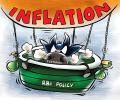
The RBI's Monetary Policy Committee brainstormed the impact of any future shocks on the inflation trajectory and stressed monitoring the cumulative effect of monetary policy actions over the past one year, which is still unfolding, revealed minutes of the rate-setting panel released on Thursday. The minutes of the meeting of the Monetary Policy Committee (MPC), headed by Reserve Bank Governor Shaktikanta Das, also indicated it would be premature to declare an end to the monetary tightening cycle, which started in May 2022 to check high inflation following the outbreak of the Russia-Ukraine war. The central bank, which effected six back-to-back hikes in the key short-term lending rate (repo) since May 2022 to check high inflation, decided to take a pause early this month.

'There are occasions when the prices of individual items like food raise inflation; then supply-side measures must be taken.' 'But if there is continued inflation, it means liquidity is aggravating the situation.'

The government on Monday appointed three eminent economists Ashima Goyal, Jayanth R Varma and Shankanka Bhide as members of the rate-setting Monetary Policy Committee of the RBI
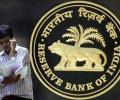
The Reserve Bank will hold a special meeting of its rate-setting committee on November 3 to prepare a report for the government on why it failed to keep retail inflation below the target of 6 per cent for three consecutive quarters since January. The six-member Monetary Policy Committee (MPC) headed by RBI Governor Shaktikanta Das will prepare the report on reasons for failure to meet the inflation target as well as the remedial measures the central bank is taking to bring down prices in the country. "Under the provisions of Section 45ZN of the Reserve Bank of India (RBI) Act 1934... an additional meeting of the MPC is being scheduled on November 3, 2022," RBI said in a statement on Thursday.
India must concentrate on manufacturing-led growth.
Eminent economist Arvind Panagariya has said India is on the cusp of returning to a high growth trajectory and voiced confidence that the country will become the world's third-largest economy by 2027-28. Currently, India is the fifth largest economy "so it's another five years.We are already in (the year) 2023. "So 2027-28, India should be the third-largest economy," Panagariya, Columbia University Professor and former Vice Chairman of NITI Aayog, told PTI in an interview in New York.

Those close to Khanna, 46, say he is keeping his options open ahead of a potential presidential run in 2028 or beyond. But others in his orbit are talking about an even more compressed timeline: running in 2024 if President Joe Biden, 80, decided not to, according to Politico, a political newspaper company based in Arlington County in the US.

'80% of the rural and urban population don't have enough purchasing power.'

Rediff.com spoke to Raghuram Rajan about his book, what enthuses him about the Indian economy, and what are the concerns he has with India's chaotic progress . . .
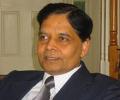
Interview with Arvind Panagariya, Jagdish Bhagwati Professor of Indian Political Economy at Columbia University.
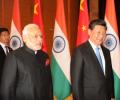
While the two sides' objectives may appear to differ, it is clear that both India and China are emphasising on the common minimum possible areas of cooperation between them, says Srikanth Kondapalli.
We invited readers to share their recommendations to the class of 2010. Here are some of the responses we received. Share yours!
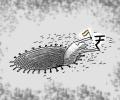
Claims of a spike in poverty and inequality in India during the Covid-19 pandemic are patently false as such claims are based on uncomparable different surveys, according to a paper co-authored by eminent economist Arvind Panagariya. The paper also noted that inequality fell in the country during Covid years, both in rural and urban areas as well as nationally. Panagariya, Columbia University Professor and former vice chairman of NITI Aayog and Vishal More of Intelink Advisors, New Delhi have co-authored a detailed paper 'Poverty and Inequality in India: Before and After Covid-19'.

The Sri Lankan government has appointed an advisory committee comprising eminent economic and fiscal experts to provide guidance on addressing the current debt crisis and engaging with the International Monetary Fund (IMF) and other lenders as the country struggles to combat the unprecedented shortage of foreign reserves.

Many has termed the state government's move of considering 'third gender' a separate caste in the ongoing exercise as a 'criminal act'

'The finance ministry and the RBI will never admit to the difficulties in the economy because if they do so, it will adversely impact the financial markets, etc.' 'They like to present a rosy picture that everything is fine and under control.'

India scripted history as the ambitious third Moon mission of the Indian Space Research Organisation (ISRO) touched down on the Moon's south pole, propelling the country to an exclusive club of four and making it the first nation to land on the uncharted surface.

Referencing to a decline in manufacturing in democratic countries such as India and the US in recent years as production shifted to China, Gandhi said the shift had produced mass inequality and anger which needed urgent attention and dialogue.

Eminent Indian-American attorney from New York Ravi Batra has termed it a "dead on arrival lawsuit".

The World Bank must become Archimedes's lever to help change the world into a more prosperous, inclusive, and sustainable planet in the 21st century. The change in leadership now provides that opportunity, observes Ajay Chhibber.

Justice Chandrachud explored the possibility for conflicting rights to exist within one constitutional framework.

'We have to think of the repercussions if public sector banks are privatised and if they go to foreign hands.'

A way out of the economic slump is to revisit the template of 15 years ago and follow its constituents, recommends Ajay Shah.

Cyclone 'Biparjoy', the first storm brewing in the Arabian Sea this year, has rapidly intensified into a severe cyclonic storm, with meteorologists predicting a 'mild' monsoon onset over Kerala and 'weak' progress beyond southern peninsular under its influence.

Six states out of 22 major states and Union Territories (UTs) generated fewer formal jobs for the youth in the September quarter than they did in the corresponding quarter a year ago, a Business Standard analysis of the data released by the Employees Provident Fund Organisation (EPFO) shows. States like Punjab (-12.4 per cent), Himachal Pradesh (-10.3 per cent), Jharkhand (- 7.2 per cent), Assam (-3.7 per cent), Gujarat (-3.4 per cent) and Rajasthan (-.1.1 per cent) saw further decline in the number of net new subscribers in the second quarter (Q2) of FY23 compared to the last year. The analysis did not include northeastern states, except for Assam. This is crucial as the subscribers in the 18-28 age group are seen as first-timers in the labour market, thus reflecting the robustness of the job market.

Democratic Left Front politician Nanayakkara was among the 42 members who declared independence in Parliament from the ruling Sri Lanka Podujana Peramuna (SLPP) coalition.

He would have a tenure of two years and is due to retire on November 10, 2024.
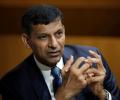
Sounding a note of caution, former Reserve Bank Governor Raghuram Rajan has said that India is "dangerously close" to the Hindu rate of growth in view of subdued private sector investment, high interest rates and slowing global growth. Rajan said that sequential slowdown in the quarterly growth, as revealed by the latest estimate of national income released by the National Statistical Office (NSO) last month, was worrying. Hindu rate of growth is a term describing low Indian economic growth rates from the 1950s to the 1980s, which averaged around 4 per cent.
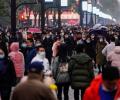
The population is important and so is the talent, he said about China, the world's second-largest economy after the United States.

Indian-American economist Abhijit Banerjee and his French-American wife Esther Duflo along with their colleague Michael Kremer received the 2019 Nobel Prize in Economic Sciences on Tuesday for their work to alleviate global poverty that has helped millions of children in an experimental approach that favours practical steps over theory.

Though Nobel Prize nominations have been a secret for 50 years, speculation abounds over the contenders for this year's prize in economics.

'Outside investors don't want to get tangled up in a religious war.'
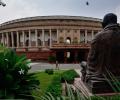
The government on Monday said that matters regarding Chinese intrusion can't be discussed in Parliament as it concerns the security of the country.

The Indian economy is likely to grow at over 7 per cent in the current fiscal year, former Niti Aayog vice chairman Arvind Panagariya said on Wednesday, while observing that the growth rate should sustain next year too provided the forthcoming Budget does not have any negative surprises. Panagariya further said recessionary fears have been around for a while but so far neither the US nor the EU has gone into recession. "From the viewpoint of India, in terms of headwinds originating abroad, the worst is probably behind us," he told PTI.
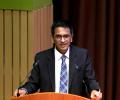
Justice Chandrachud will serve as the CJI for two years till November 10, 2024.

The jury is still out on the decision to demonetise high value currency notes on November 8, 2016, with the government claiming it has helped greater formalisation of the economy while critics saying it has failed to curb black money and reduce dependence on cash. On November 8, six years ago, Prime Minister Narendra Modi had announced the demonetisation of old Rs 1,000 and Rs 500 banknotes and one of the key objectives of the unprecedented decision was to promote digital payments and curb black money, besides eliminating terror funding. As per a Reserve Bank data, currency with the public has jumped to a new high of Rs 30.88 lakh crore an October 21, indicating that cash usage is still substantial even six years after the demonetisation move.
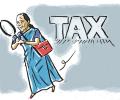
'When you need to revive the economy, when you need to revive aggregate demand, you cut taxes.' 'But what's this government doing?' 'It's increasing taxes for the middle class and the vast majority of the poor on fuel, which has a ratchet effect on most other products.'
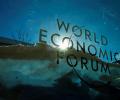
The World Economic Forum on Monday said it has decided to defer its Annual Meeting 2022 in the Swiss Alpine ski resort town of Davos in the light of continued uncertainty over the Omicron outbreak. The Annual Meeting, which was scheduled to take place in Davos-Klosters, Switzerland between January 17-21, 2022, is now planned for early summer. The World Economic Forum (WEF) held its last Davos summit, attended by top leaders from across the world, in January 2020, just before the outbreak of the coronavirus pandemic, while the 2021 meeting could not take place due to the outbreak.

The Indian economy is expected to grow around 10 per cent during the current financial year on the likelihood of fewer COVID-19-linked supply disruptions and buoyancy in the global economy, said Poonam Gupta, director general of economic think-tank NCAER. The real challenge, however, would be to sustain a growth rate of 7-8 per cent in years to come, she said. "We could see annual growth in the ballpark range of about 10 per cent. "The reasons for this perceived optimism are: fewer supply disruptions; increased pent-up demand in the traditional and contact-intensive services; and a buoyant global economy.
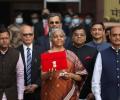
'India's output contraction in the previous year was among the worst in the world!'
 © 2026 Rediff.com - Advertise with us - Disclaimer - Privacy Policy - Sitemap - Feedback - About us - Terms of use - Grievances